

Editor's Note: This article has been faithfully transcribed from the original Beyond the Veil Magazine, Issue #35.
Archive Reference: BTV-035-01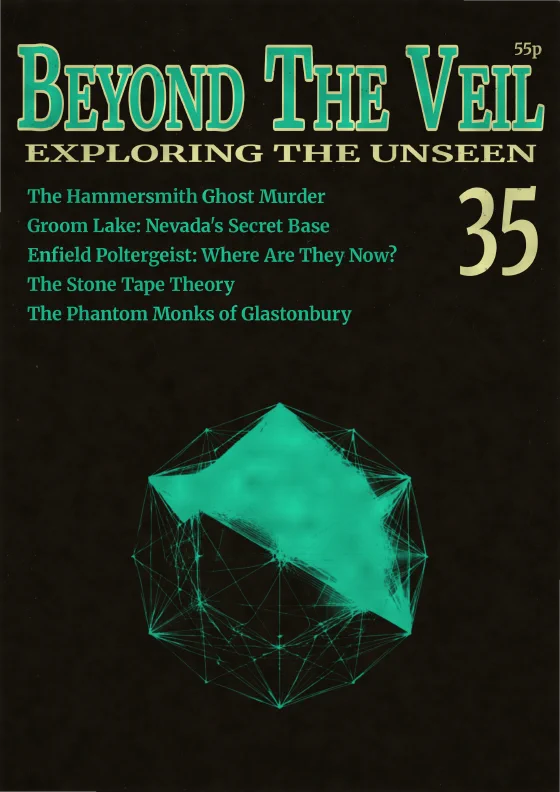
The Hammersmith Ghost Murder
Issue #35: November 1981
In the winter of 1803, the residents of Hammersmith, then a village on the outskirts of London, were terrorised by a ghost. A pale figure in white roamed the lanes at night, attacking travellers and sending the village into panic.
On January 3, 1804, Francis Smith, a twenty-nine-year-old excise officer, went hunting for the ghost. He found Thomas Millwood, a plasterer returning home from work in his white working clothes.
Smith shot Millwood dead.
The Terror
The Hammersmith Ghost had been active for two months before Smith took up his gun. Witnesses described a tall figure draped in white sheets, appearing suddenly from the darkness to grab or strike at passersby.
Several victims came forward. A woman was so frightened by the apparition that she fell into fits and died shortly after. A waggoner was attacked and barely escaped. A pregnant woman claimed the ghost had followed her home, causing her to give birth prematurely.
The village was in uproar. Respectable citizens refused to venture out after dark. Rumours spread that the ghost was a suicide, a demon, or a resurrectionist from the nearby burial grounds.
The Hunt
On the night of January 3, Francis Smith armed himself with a shotgun and set out to confront the ghost. He was accompanied by William Girdler, a watchman, who had also seen the mysterious figure.
Near Black Lion Lane, Smith saw a pale shape approaching. He challenged it. The figure advanced. Smith fired.
Thomas Millwood fell dead, shot through the face. He had been walking home from the home of his father-in-law, still wearing the white flannel clothes common to plasterers.
Smith had killed an innocent man.
The Trial
Francis Smith was charged with murder. His trial at the Old Bailey attracted enormous public attention.
The defence argued that Smith had genuinely believed he was confronting a supernatural threat. He had acted to protect his community from a proven danger. The shooting, while tragic, was an honest mistake.
The prosecution countered that belief in ghosts was no defence for taking a life. Smith had chosen to arm himself. He had shot without proper identification. He was responsible for his actions, whatever his beliefs.
The jury found Smith guilty of murder, a verdict that carried a mandatory death sentence. But they recommended mercy, given the circumstances.
Lord Chief Baron MacDonald was troubled. He accepted that Smith had acted in good faith but could not accept that ghost-hunting justified homicide. The law made no provision for supernatural threats.
Smith was sentenced to death, then immediately granted a stay of execution. King George III commuted the sentence to one year of hard labour. It was widely felt that justice had been served, if imperfectly.
The Ghost Revealed
After Millwood’s death, the ghost of Hammersmith was unmasked.
John Graham, a shoemaker, confessed that he had been dressing in a white sheet to frighten a mischievous apprentice who had been tormenting his children with ghost stories. His prank had spiralled out of control, terrorising the village for weeks.
Graham was charged with assault against the surviving victims of his impersonation. He was acquitted on the grounds that he had not intended real harm and had not been responsible for Smith’s actions.
The absurd chain of events was complete. A prank had caused a panic. The panic had caused a death. The death had caused a legal crisis. And at the end, no one was truly punished for anything.
Legal Legacy
The Hammersmith Ghost case influenced English law for over two centuries. It established important precedents about reasonable belief and the limits of self-defence.
Could a person act on genuinely held but mistaken beliefs? The law evolved to say yes, within limits. A defendant who honestly and reasonably believed themselves to be in danger could claim self-defence, even if no danger actually existed.
But the reasonableness of the belief mattered. In 1804, belief in ghosts was common. Today, such a defence might be viewed differently.
The Deeper Questions
The Hammersmith case raises questions that transcend its legal significance.
What happens when a community convinces itself that a supernatural threat is real? The ghost was never anything but a man in a sheet, yet the terror was genuine. The woman who died of fright, the pregnant woman who gave birth prematurely, the entire village cowering in their homes at nightfall: their fear was as real as any ghost.
Francis Smith acted as many in his position might have acted. He believed he faced a threat. He armed himself. When the threat appeared, he responded with deadly force.
In a world where we struggle to distinguish real dangers from imagined ones, the Hammersmith Ghost case remains a cautionary tale. Fear can kill. Belief can kill. And the innocent often suffer for the mistakes of others.
Thomas Millwood was buried in Hammersmith churchyard. His headstone, if it survives, makes no mention of the circumstances of his death.
The ghost of Hammersmith, if ghosts there be, has never walked again.
Readers interested in the intersection of supernatural belief and legal history are invited to contact our research department.