

Editor's Note: This article has been faithfully transcribed from the original Beyond the Veil Magazine, Issue #19.
Archive Reference: BTV-019-01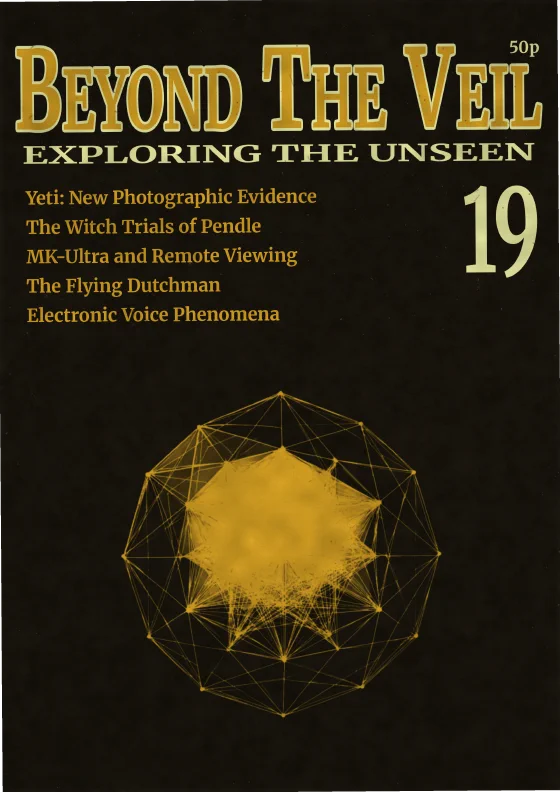
The Witch Trials of Pendle
Issue #19: July 1980
In 1612, ten people were hanged at Lancaster Castle for the crime of witchcraft. They had been accused of sixteen murders by magic. The trial records, uniquely detailed for their era, reveal a community convulsed by fear, superstition, and the settling of old scores.
Nearly four centuries later, Pendle Hill and the villages at its foot remain among Britain’s most haunted locations.
The Historical Case
The accused were drawn primarily from two families (the Demdikes and the Chattoxes) who lived in poverty at the margins of society. Both matriarchs, Elizabeth Southerns (known as Demdike) and Anne Whittle (known as Chattox), were reputed to be cunning women who sold charms and curses to their neighbours.
The case began in March 1612 when Alizon Device, Demdike’s granddaughter, encountered a pedlar named John Law on the road. When he refused to give her some pins, she cursed him. Minutes later, Law suffered what appears to have been a stroke.
Law’s son reported the incident to the local magistrate, Roger Nowell. What began as an investigation into a single curse expanded into a witch hunt that consumed the district. Under interrogation, family members accused each other and their neighbours. Tales of pacts with the Devil, shape-shifting, and murder by magic poured forth.
Twelve were arrested. Demdike died in prison before trial. Ten were found guilty and hanged on 20 August 1612. One was found not guilty. One was sentenced to the pillory for a lesser offence.
The Evidence
The trial was documented by Thomas Potts, clerk to the Lancaster Assizes, in The Wonderful Discovery of Witches in the County of Lancaster. His account, though written to justify the verdicts, provides extraordinary detail about the accusations and confessions.
The accused confessed to possessing familiar spirits (clay figures, dogs, and other creatures) that did their bidding. They admitted to attending a witches’ sabbath at Malkin Tower. They described murder by magic, creating clay images of their victims and destroying them to cause death.
How much of this was true? The accused were poor, illiterate, and subjected to intense pressure. Some confessions were clearly extracted through suggestion and intimidation. Others may have reflected genuine beliefs: the Demdikes and Chattoxes may have practised folk magic, even if that magic had no real effect.
What is certain is that the community believed in their power. Neighbours testified to cattle sickening after a curse, to illness following a disagreement, to death preceded by supernatural threats. Whether these were coincidence, psychosomatic effects, or something more remains unknown.
The Haunted Landscape
Pendle Hill dominates the landscape of East Lancashire, rising 1,827 feet from the surrounding valleys. Its brooding presence has inspired supernatural associations since long before the witch trials.
In recent decades, visitors to the Pendle area have reported numerous paranormal experiences:
Malkin Tower: The site of the witches’ supposed sabbath has never been definitively identified, but several locations claim the honour. All report strange phenomena: cold spots, unexplained sounds, and the sensation of being watched.
Lancaster Castle: The site of the trial and executions is said to be haunted by the spirits of those who died there. Guides report footsteps in empty corridors, doors that open and close without cause, and glimpses of figures in period dress.
Newchurch in Pendle: The village church contains the “Eye of God,” a carved stone in the tower said to ward off evil. Visitors report feelings of oppression and unease. The churchyard, where some of the accused may be buried, produces regular reports of apparitions.
Pendle Hill itself: Walkers on the hill describe unusual experiences: sudden fogs that appear from nowhere, sounds of chanting or singing when no one is present, and sightings of robed figures on the slopes.
Modern Witchcraft
The Pendle area has become a pilgrimage site for modern practitioners of witchcraft and paganism. They regard the executed as martyrs, victims of religious persecution rather than genuine criminals.
Each Halloween, ceremonies are held to honour the Pendle witches. Some claim to have contacted their spirits. Others believe that the magical traditions they practised survive in fragmentary form, passed down through generations of rural cunning folk.
Whether the Pendle witches possessed genuine supernatural power is unknowable. What is clear is that belief in their power shaped events in 1612 and continues to shape experiences in the present day.
Conclusion
The Pendle witch trials represent a collision between the official Christianity of the state and the folk beliefs that persisted in rural communities. The accused may have been harmless cunning women, genuine practitioners of malefic magic, or simply convenient scapegoats for a community’s fears.
What they left behind is a landscape saturated with supernatural associations. Pendle Hill rises above the Lancashire valleys, dark and ancient, as it has done for millennia. And in the villages at its foot, people still speak of the witches, and still report strange experiences that suggest their story is not entirely past.
Readers who have experienced phenomena in the Pendle area are invited to write to our research department.